On February 26, 2026, something powerful happened at the Wilson Building.
Young people who have experienced homelessness, incarceration, and violence stood before the DC Council’s Committee on Human Services and told their stories.
Staff who walk alongside them every day testified about what consistency means for healing.
And our founder, Deborah Shore, made one thing clear: the Sasha Bruce Drop-In Center, known as “The Bruce” by the youth we serve, is staying open.
For 12 years, The Bruce has been more than a building. It’s been a family. A safe space. A lifeline for youth who have nowhere else to go.
Last year alone, we served 793 young people at our Drop-In Center on Barracks Row.
Despite recent funding cuts, we are committed to keeping our doors open—because the young people who testified made it clear: this place saves lives.
Below, read their testimonies in full. Their words speak for themselves.
Testimony of Devin Williams

Testimony of Devin Williams in Support of the Sasha Bruce Drop-In Center
My name is Devin Williams, and I am sharing my story to speak on the importance of keeping the Sasha Bruce Drop-In Center open.
I first experienced homelessness at 18 after being kicked out of my dads house, and battling a opiod addiction. When that happened, I truly had nowhere to go. I went to my PO office one day, they put me in a emergency shelter, but during the day, I didn’t have a safe place to be. I was constantly trying to figure out where I could sit, rest, or just exist without feeling unsafe or unwanted. I slept most night in abbondend houses, i usally only ate when i was going to school. I had a lot of childhood trauma, and anger.
It was my mans at the shelter who recommended Sasha Bruce as a place I could go during the day …..somewhere I could find stability when everything in my life was hectic
When i arrived , I noticed something different. At Sasha Bruce, the staff actually want to help you. You don’t have to beg. You don’t have to prove your worth. They are ready to support you no matter what.
What makes Sasha Bruce different from other drop-in centers in DC is its size and sense of community.
It’s smaller and more personal. At bigger centers, it’s easy to be forgotten. You can spend months trying to get services with no progress. Case managers may not even remember your name!! it feels like you’re just a number in the system.
But not at Sasha Bruce.
At SBY, I was supported. Sasha Bruce helped me get my life together…vital documents, apply for food stamps, and a safe place to rest when I had nowhere else to go.
I can now say that I’m in school, currently attending paid training programs, and im on the right track
If the Sasha Bruce Drop-In Center were to close, it would leave endless young people without a place to go, relax, and get their life together
Youth in this city count on these services not just to survive, but to grow, stabilize, and thrive.
Sasha Bruce is more than a program, its a FAMILY.
Thank you for listening.
Testimony of Devon Young
What bought me here today , is to show support for sasha bruce giving that its a risk of closure.
What brought me to the Sasha Bruce Youthwork Drop-In Center is simple — I came home after doing 6 years in prison, and I had nowhere to go.
No support system.
No safety net.
Just me… trying to figure out how to start life over again.
When you come home after being gone that long, everything feels different. You don’t know who to trust. You don’t know where you fit. And if we’re being real — it’s easy to fall back into the same stuff that got you locked up in the first place.
I needed somewhere to stay, somewhere safe, so I started Googling housing programs in DC. Sasha Bruce was the first thing that popped up.
I pulled up to the Drop-In Center nervous.
But after being there for a little while, I started to feel comfortable. Everybody there was going through something too. Everybody was just trying to get their life together. It didn’t feel like a program… it felt like a place where people understood what it means to struggle.
Coming home is hard mentally. Being locked up takes a toll on you. And trust is not easy to build after everything you’ve been through.
But Sasha Bruce helped me remember that I am not my mistakes.
They helped me get my vital documents together.
They are helping me find jobs that actually work for my situation.
And the staff don’t treat you like a number — they talk to you like real people. Like mentors. Like somebody who actually wants to see you win.
They keep me motivated to stay on the right path.
Because the truth is… I do get nervous about falling back into old ways sometimes.
But I want to do better.
And support like this is what keeps me moving forward instead of backwards.
If this Drop-In Center closes, it would feel like the only real support I’ve had since coming home is being taken away.
This place helps people like me stay on track.
And without it… I don’t know where I’d be.
Thank you.
Testimony of Flo White

“Continuity Is Survival”
Good morning Chairperson and Councilmembers.
My name is Flo White.
I am a Case Manager at the Sasha Bruce Youthwork Drop-In Center.
But before I was staff… I was a young person who needed that space.
When you are experiencing homelessness, the hardest part is not always the lack of housing.
It’s the instability. It’s the constant restarting. It’s telling your story over and over again. It’s never knowing if the door you walk through will still be open tomorrow.
The Sasha Bruce Drop-In Center has been open to DC youth for over ten years.
That consistency matters more than we often acknowledge.
Because for the young people we serve, consistency is intervention.
We serve youth with severe trauma histories. Youth on the autism spectrum. Youth living with untreated mental health diagnoses. Returning citizen youth coming home from incarceration. Young parents trying to stabilize their lives before aging out of the system.
For many of them… change is not neutral. Change is destabilizing.
When a young person with high levels of trauma finally finds a place they trust, that is when the real work begins.
That is when they disclose what is really going on. That is when they accept referrals. That is when they agree to housing plans. That is when they begin to believe they are worthy of stability.
Trust is not automatic. It is built over time.
And when that trust is disrupted, when a young person is asked to start over somewhere new, retell their story, rebuild relationships— that can set them back months.
For youth preparing to age out, those months matter.
The transition between youth services and adulthood is already one of the most fragile points in the system.
If a young person has to restart case management during that window, it can mean losing momentum. It can mean missing documentation deadlines. It can mean losing priority for housing opportunities.
And we know that once youth fall into the adult system… they are often prioritized last.
The Sasha Bruce Drop-In Center does more than provide services. We provide relational continuity.
I know this because I lived it.
As a young person, I walked into that center unsure of my future. I left with housing. Employment. Confidence. And a support network that still stands beside me today.
Now, I come to work every day and offer that same continuity to the youth who walk through our doors.
I sit with them while they complete applications. I help them navigate complex systems. I cook meals with them. I listen when they are overwhelmed.
Because for many of them, we are the only stable place in an otherwise unstable life.
The question before you is not about programs.
It is about whether the young people who rely on us will have to start over again.
I urge you to ensure continued funding for the Sasha Bruce Drop-In Center —because for our youth, continuity is survival.
Thank you.
Testimony of Safari Hood

Good afternoon Councilmembers,
My name is Safarii Hood, and I’m here today because places like the Sasha Bruce Youthwork Drop-In Center are the difference between survival and purpose.
When I first came to DC in November of last year, I wasn’t chasing a dream — I was running from instability. I came from the slums of Georgia, homeless for the first time in my life, searching for something I couldn’t quite name yet… belonging. I knew I had a purpose, but I didn’t know where to find it — or who would help me discover it.
Someone told me about a place that helped young people in need of housing. A place that didn’t just offer services, but offered humanity.
So I walked into the Drop-In Center.
And what I found wasn’t just assistance — I found acceptance.
At Sasha Bruce, it doesn’t matter who you are, where you come from, who you love, how you identify, or what struggles you carry. You are welcomed. You are seen. You are heard.
This isn’t just a building where you pick up clothes or store your belongings — though those things matter when you’re trying to survive. This is a space where you can sit down and talk to someone without being judged. A space where your story isn’t treated like a problem, but like potential.
Because of this program:
I got connected to a 90-day housing program.
I was paired with an incredible case worker who didn’t just tell me what to do — they pushed me to believe I could do it.
I started applying for jobs.
I obtained my vital documents — something that felt impossible when I first arrived.
And most importantly…
I built a community where I can finally be my full, authentic self.
For the first time in my life, I am not just surviving — I am becoming.
Sasha Bruce creates a rare kind of clarity for youth like me. They know our realities. They understand our struggles. And unlike so many systems that make promises they never keep, this is a place that follows through.
They don’t just say they care — they show it.
If this Drop-In Center closes, it wouldn’t just be the loss of a service.
It would be the loss of a lifeline.
It would mean young people like me losing the one place that helped us rebuild when everything else fell apart.
And I can honestly say — I don’t know where I would begin again without it.
This center doesn’t just help us find housing.
It helps us find ourselves.
And that is worth saving.
Thank you.
Testimony of Sequira White
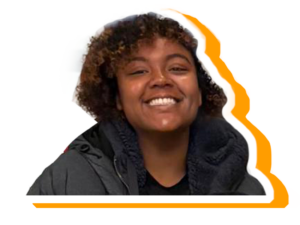
My name is Sequira White, and I am here because my life changed when I had to choose between staying in a violent home or becoming homeless.
Last year, I left my family after experiencing domestic violence. It was a toxic and unsafe environment, and I had to leave for my own survival. Walking away meant losing stability, familiarity, and the only home I knew — but staying would have meant losing myself.
When I became homeless, I wasn’t looking for handouts. I was looking for safety. I was looking for compassion.
My sister told me about Sasha Bruce, and I came to the drop-in center unsure and afraid. I didn’t know if I had made the right decision by leaving home. I didn’t know what my future would look like. All I knew was that I needed somewhere that didn’t feel like danger.
When I first arrived, I was hesitant and guarded. But over time, I began to open up — because the staff made it possible. They didn’t treat me like a problem to manage. They treated me like a person worth caring about.
Sasha Bruce helped me access resources, explore job opportunities, and build community — but what they gave me most was dignity.
Many other drop-in centers feel institutional. You walk in and immediately feel like you are being monitored, processed, or judged. It can feel like punishment — like homelessness is a crime you’re serving time for.
And for youth who are already escaping violence, neglect, or trauma, those environments don’t help — they retraumatize.
Sasha Bruce is different.
It feels human. It feels safe. It feels like somewhere you can finally exhale.
For many of us, Sasha Bruce is the first place where we are not treated like a number, a case file, or a liability. It’s a place where people learn our names, hear our stories, and respond with care instead of control.
Closing Sasha Bruce would not just be shutting down a building.
It would mean sending youth back into systems that feel cold, unsafe, and dehumanizing.
It would mean telling young people fleeing violence that the place where they felt safe no longer exists.
It would mean removing one of the few spaces that understands that homelessness is not a failure — it is often the result of survival.
Sasha Bruce has been part of this community for years. We know them, and they know us.
Change can be necessary — but removing something that works, something that heals, something that saves lives, is not progress.
It is harm.
I ask you to protect this space — because for many of us, it is not just a drop-in center.
It is the difference between surviving and giving up.
Thank you.
Testimony of Debby Shore
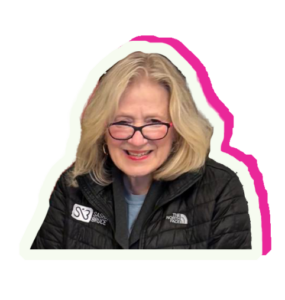
Chairman Frumin and other Members of the Committee:
Thank you for the opportunity to testify today. I am the Founder and Executive Director of Sasha Bruce Youthwork which has over 50 years of experience and 23 programs that support youth and families. The teens and young adults in our city who are in crisis and unhoused are our primary focus but we also offer community programs as a means of stabilizing youth and families. Sasha Bruce has deep and abiding relationships with youth and families in DC.
There are a number of issues that are important today about our youth homelessness service system that I hope other colleagues will be covering as I want to focus my attention on our Drop In Center. I am here asking the Council for support to continue our services which have been foundational to young people in our city and cannot simply be replaced.
We have operated our Center on Barracks Row for 12 years under a contract with DHS. An RFP was let and DHS awarded this contract to another provider. I disagree deeply with the merits behind the decision and take issue with the decision making process. A Debrief with DHS did not make the decision any clearer and different reasons have been provided to us and others. One point on this is that there was no value given to experience in the youth community of DC. We have been completely unsuccessful at getting any new consideration so I am no longer going to try to litigate the decision. But I am here to to say that even if DHS does not see the value in the considerable currency we have in the youth community …the Council should. We focused our year end fundraising effort on keeping our Drop In open so we have some lead time while we find our champions on the Council.
We have young people and staff here today who are testifying why our Drop In Center was their choice and why our history matters. I hope you will see them as I do as wise and brave.
I am concerned not only by the decision to de-fund us but by decisions since. The van Operator that takes young people from the youth shelter to the Drop Ins was told to not to take youth to our Drop In as we were closed. We learned because youth came pouring in the first days of the new Center’s opening to ask why we closed. This puts into their already troubled world even more mistrust of those in charge. We also know of a large gathering of youth being told by DHS leadership about the Youth Drop In Centers distinctly leaving us out completely. And we also know that the Warm line operated by CFSA was told to not refer to us anymore. The van drop off decision was reversed after our protest.
But what does this say. We assumed they felt they needed to do all they could to steer youth to the new Center because the new provider has never worked in DC before and has had little connectivity to youth.
But also and on a larger scale doesn’t it say that the DHS defines itself as a system of care limited by who they fund versus the leader for a collaboration of any and all programs and efforts for help to youth experiencing homelessness. This concern adds to others that have come over the past few years…Like the change made by fiat that there is now a lifetime limit on the number of years we can provide services to youth. This has a large impact because we have such a large number of young people in our extended transitional living program who do have disabling conditions but we have no access to permanent supportive housing in the youth system.
An important point of reference for the lack of care for building a strong homeless youth system is in DHS’ decision to flat fund all programming for 6 years and plans to decrease funding overall in many of those years…Now we are in a financial crisis but that was not true throughout.
Over the past number of years it has been by the intervention of the Council which has restored funding to keep us from losing ground….
I am asking for that commitment now. Do not let our Drop In Center close We saw 793 youth last year…there are more than enough young people who need supports and Sasha Bruce provides a foundation for youth that has proven itself and that is worthy of your devotion.
Sasha Bruce is here today in force as youth and family workers…as clients..young leaders and as citizens to ask for you to stand with us…to make us whole…to assure we do not lose ground…